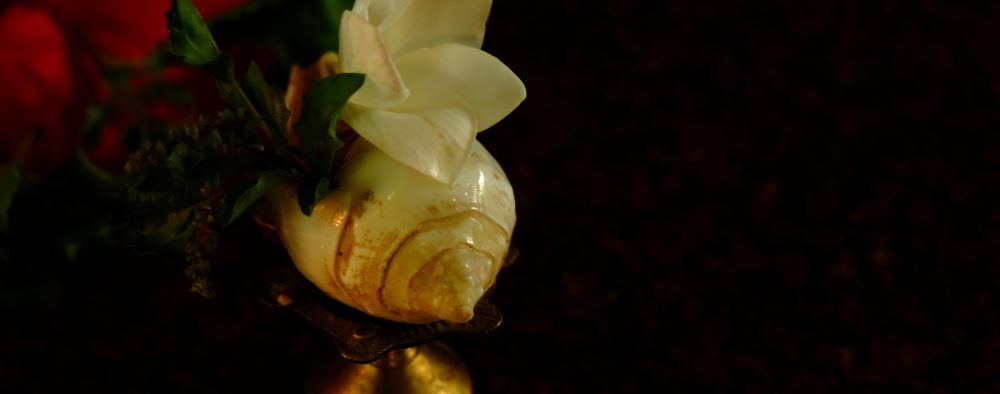
My last post about this book was eleven months ago, that’s how long it has taken me to finish this book. 2024 was very busy but I kept at it. My long essay will be published soon and I have finished shooting the experimental short. There was little time for reading outside of work with long periods without reading a page, sometimes managing just one page but it is only now, during the Christmas break, that I’ve had the opportunity to sit with this book without interruption.

I lost the ease of reading in Marathi and Hindi when I moved to Aotearoa so found it hard to read a Hindi literary book at slow pace. I’ve mentioned this in my first post about the book. It has been a very good, enjoyable exercise to stimulate my brain.
In my second post about the book I talked about how Ret Samadhi रेत समाधि is not just a brilliant, biting social commentary on the neoliberal Indian middle class but much, much more.
It is primarily a staunchly feminist book. At the centre of the tale is an eighty-year-old woman Chandraprabha Devi. She rarely speaks (except towards the end of the book) but everyone has an opinion about her. The story unfolds through the eyes of various observers. As if Geetanjali Shree wanted to mimic Indian patriarchy where women, especially older women, are generally redundant. An older woman is either a mother or a grandmother. Meant to be silent, benign and nurturing towards her family and the world. She does not have a past or secrets. She must not have a past or secrets.
Ret Samadhi रेत समाधि holds the trauma of Partition and how it seeps through generations to be gradually dismissed as a myth, where enmities imposed by our governments and their agents are normalised. The violence is justified.
Geetanjali Shree sets the story an unknown city in North India (if it is Delhi then there are no specific landmarks, my bad if I missed anything. I am not from Delhi.) Apart from the acid view on contemporary urban society she also invokes climate change, environmental degradation and offers an insight into the teachings of Hindu mythology. A complaint was laid by a Hindu man regarding references to Shiva and Parvati which he said were derogatory forcing organisers to cancel a felicitiation in Agra. (Ironically confirming what Geetanjali was expressing about Indian society.)
From North India the book takes us to the Wagah on the India-Pakistain border, then to Lahore and finally Khyber Pakhtunkhwa, formerly the North-West Frontier Province under the British Raj. We travel along the Grand Trunk Road, one of the oldest and longest roads in the world, connecting Central Asia to the subcontinent witnessing nomads, traders, itinerants and invaders. We witness along with the road the mindless violence of Partition, lives torn apart, relationships shredded. We drown in the sandstorms of the Thar as women, girls, flee men, human beasts of prey.
Ours is the eternal heartbreak we carry in the mitochondria of our cells that will never heal because the hawks keep scratching the wound.
There are dollops of magic realism that reminded me a little bit of One Hundred Years Of Solitude although that is my deficient knowledge because I am sure Indian literature is replete with magicalism. I just don’t know enough.
I strongly recommend Ret Samadhi रेत समाधि I If you cannot read Hindi then get the English translation by Daisy Rockwell.
And in keeping with my promise to myself to read as much fiction from South Asian women as I can, I have started Fatimah Asghar’s When We Were Sisters.
Meanwhile here is another little reading from the book. One of the few times Chandraprabha Devi, the eighty-year-old protagonist speaks.






 DrSapna