
Paresis Of Mythical Past.


The 34 Asterix comic books feature 704 traumatic head injuries. Thus have academics analysed and published in a paper in the European Journal Of Neurosurgery, Acta Neurochirurgica. The researchers, lead by Marcel A Kamp, examined the signs (periorbital ecchymosis, hypoglossal paresis etc) and rated the seriousness of each injury according to the Glasgow Coma Scale (GCS). Over 50% of the traumata were classified as severe (GCS between 3-8) and in 696 cases the cause was blunt force while 8 were caused by strangulation. Of course most of the victims were Romans (63.9%) and the rest included Vikings, Britons, Normans, Goths and even extraterrestrials; most of the injuries were caused by Asterix and Obelix (57.6%). Those who consumed Getafix’s Magic Potion suffered from more severe traumata. So goes on an article reporting the same. The analysis has the world of science excited and impressed. Okay. So that might be one big joke and not so robust, apparently, but someone tried.

I wonder. Can Indian pop kitsch mythology withstand even the slightest scientific or academic analysis? It is not an (pseudo)intellectual question. Could the gods, goddesses and demons (asuras) undergo tests classifying actions and reactions, using the Amar Chitra Katha comics as reference? Yeah, Asterix and Obelix cannot be compared to the 330 million Hindu gods because they are created by humans for comic books, as cartoon characters. That is one argument. Hindu mythology has developed over millenia and is largely an allegory for the mysteries of the world and questions about existence. But aren’t the pictures in the ACK comics derived from some reference? Don’t we make our gods in the images we want to see and admire? Or does the aura of mythology and the holiness attached to it preclude enquiry and analysis?

One Sunday morning some years ago, a friend and I went to the Avondale Market. There was a stall selling pooja paraphernalia. The usual kitsch and glitter that our Hindu gods and we love. And fair, rotund, rosy-cheeked, beautiful goddesses. ‘Nice goddesses,’ I told the Indian man from Fiji. ‘These images are inspired by Raja Ravi Varma you know.’ The man was aghast. ‘These goddesses are thousands of years old, sacred. Our holy texts describe them.’ ‘Really, who told you?’ I wanted to have a few laughs. My friend rolled her do-you-have-to eyes. 🙂 Pardon me for talking down from my pedestal but how on earth do we move ahead if we don’t know where we come from? And I don’t mean in sociological terms or as a migrant living in the Western world.  If religious priests had it their way we would all live and die blind in a world created by their gods. So we need to know these gods came about in the first place. No?

I swing between being atheistic to agnostic and somewhere in-between I acknowledge the presence of a higher power, the laws of this universe that are equal and unrelenting. The rest is all man made. So are our stories and myths. I’ve always enjoyed the many stories from Hindu mythology. My grandfather was an amazing storyteller and he could narrate stories at the drop of a hat. Not just from the Hindu epics but tales of local saints and miracles, unkown-to-Brahmanism.  He was an avid reader and taught us to be the same. Then to seek the real meaning beneath. That is what Hindu mythology is about. Representing the ever flowing universe and all within. Everything alive,  everything divine, everything in flux. Nothing is pure good or pure evil, one balances the other and even the Gods (Brahma, Vishnu, Shiva) are not infallible.

Even if, at this moment, the universe cannot be comprehensively broken down within the realms of physics and biochemistry, why not try to analyse where the imagery comes from? My ancestral family deity is represented by a stone.  Never mind the statue in-between. And the village goddess is as black as sin.
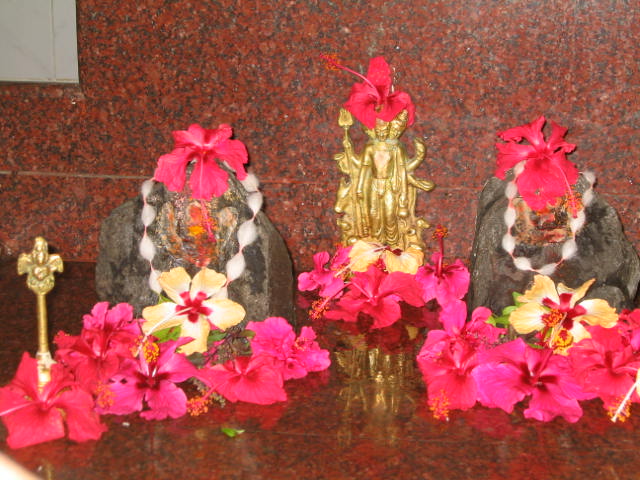
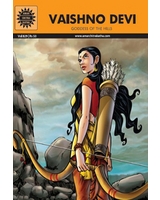
Now think of a pictorial representation in terms of popular culture. In order to humanise and hence relate to mankind. Is that an ever evolving process or set in stone? If we let the religious priests have their way, then yes, pictorial representations would be set in stone. Unless there is money to be made. Then I suppose it is fine for Vaishnodevi to look like a light skinned version of Pocahontas as imagined by Disney? The fairness cream being sanctioned by the holy texts. Until then. Paresis of mythical past. Just saying. Now I’m off to re-read Asterix’s adventures. Along with my surgery chapter on head injuries.


All About Me.


Almost two months since I posted last. Thanks to Nadi who commented, asking me to write a new post. It never ceases to surprise me that people actually read what I write and is gratifying and overwhelming. 🙂 The reason I have not put pen to paper, to use an old term, is that I am very occupied with a project that requires a 110% of my attention. It concludes mid-June and I will not know the outcome for sometime after but that can potentially change a lot of things. For me.

My new year’s resolution for 2011 was all about me. Not to make more money, not work more but beauty stuff me. Maybe more facials and pedicures-that was sort of the idea.

But I did not know where to begin. It is not like I am ‘un-vain’. Of course not. I am a girl who likes bling, a little bit of make up, gorgeous shoes, nice clothes, shiny hair. I do visit salons and beauty parlours; I have the serums and the night creams and under eye gels; all the anti-ageing potions and lotions that keep me from running a magnifying lens over my crow’s feet and other wrinkles. It still does not stop my girlfriends from declaring that I ‘dress like a maid’ or turning up a nose at my op-shop second hand clothes. It is just that I am not obsessed with the beauty thing and fashion for me is a medium. A form of expression. It was time to explore that this year.

The first thing my semi-noob, geeky brain figured out was that I needed an education. I had be able to use the knowledge of beauty and fashion to adapt to my person and consequently enhance it. Now I am not one of those try-the-testers-spray-the-perfumes types just for the sake of it. I feel awkward at beauty counters asking for information. Instead my comfort zone is the computer. I started browsing Youtube. Really I had no idea! There are zillions of videos on how to apply eyeliner  (or for that matter how to brush your teeth and wash your hair). Cat’s eyes? Eyeliner for big eyes, small eyes, (East) Asian eyes, Middle Eastern eyes…. I have used liquid eyeliner for years but did not know eyeliner came in cream/gel and pencil form too. The effort put into these videos made me wonder at the time spent into ‘looking good’.  And the money. The money! How much money do women spend on make up? Do you really have to bin the mascara after a year? Even if you have used it just five times?

As I my cerebrum was absorbing and storing this wisdom I read that Bobbi Brown and M.A.C had released concealer and foundation for brown women. i.e. South Asian women. (I must confess here I did not know Bobbi Brown was a woman. Somehow the name is like that of a man. Wait, wasn’t Whitney Houston’s ex-husband Bobby Brown? D-uh!) Anyway, concealer and foundation for South Asian women. Us South Asian women have a different pigment in the skin making it incompatible to use make up made for white/Caucasian women. Or African women. Our underlying skin tone is yellow which is why concealers and foundations incorporate that and help us look flawless. East Asian women have a slightly orange tone and African women have a purple/blue skin tone. (I cannot corroborate from any specific online article but have collated this from various articles. Please correct me if I am wrong.)

Okay so I could go to the Bobbi Brown counter and buy myself a concealer. Or so I thought. Did I have the guts to ask one of those fabulously made up dolls at such places to give it to me while she crushed me with her once-over and while I cringed at the price as well as my bluster/ignorance? A friend visiting from India and well integrated in the world of the Hindi film industry accompanied me. For moral support. And I was pleasantly surprised. The girl at the Bobbi Brown counter took one look at my face, whooped with delight at the idea of a blank canvas and got painting. Then held the mirror for me to see how gorgeous I had become. I did not have the heart to tell her that it was not me at all. It was someone with lots of goo on her face; someone who would wonder if people are staring at her because she was ‘gorgeous’ or looked like a clown. The lovely lady then wrote down the matching shades for me to buy later. One day I will. When I have money to spare. Because concealer does not come by itself. There is a primer, there are brushes, there is a corrector, foundation and powder. No I do not have to consume it all but that is the general idea-that it goes together.

Meanwhile my education continues. I’ve learnt that this scary looking thing is an eyelash curler and not a surgical instrument; that there are many websites and blogs dedicated to women wearing make up; that these women want to share their experiences and experiments just as I want to on my blog; that there is a fine line between preoccupation with looking good and doing it for the sake of decent appearances. I believe in dressing, looking and feeling pleasant so when others interact with you they get the vibes, feel happy and smile. One goes with the other.

I now have three blushers-peach, light pink and maroon/crimson. I bought myself two new lipsticks last months. I still think fashion is a medium and so want to design Asian inspired streetwear for women one day. Meanwhile I have to now get back to my project and get it done with. Cheers.

Passive Performance As Multiculturalism. (In New Zealand) Part 2.


In part one of this blog I introduced my argument and quoted Milton Fisk. Multiculturalism in New Zealand is based on a neoliberal model that recognises diversity but does not allow it flow over into the mainstream because that upsets the economic structure and global expression of the same. I used as a starting point an article by Henry Johnson and Guil Figgins that: (a)Examines the re-contextualization and transformation of Diwali in New Zealand with emphasis on performance (b) Explores the role that various organisations have and looks at (c) The ways in which performances are expressions of self-identity and part of a process of place-making.

Re-contextualization/Tranformation:

The paper says Diwali Downunder is a secular affair that is recontextualised and transformed into a celebration.

Diwali, as celebrated in India, is a family affair. However it is still public in a way because the entire country celebrates it according to region and community. So it is a public-private affair. There is no place for communal performance of any kind especially Bollywood. The ‘transformation’ cannot be called secular because the very nature of the festival excludes non-Hindu South Asians-it is a Hindu festival within a ‘homogenous’ space as per organisers. Perhaps because India is a larger economy than other South Asian countries? In my film Jennifer King says that since the Chinese Lantern Festival was successful, they decided on Diwali. (So a non-religious Chinese festival is the same as a deeply religious Hindu festival?) Then the very nature of this does not offer any scope for re-contextualization. My questions:

  • Is a publicly celebrated ‘foreign’ festival a true transformation when the space is predetermined by government organisations?
  • How can a culture be re-contextualized in that same space which only seeks passive participation from the local Indian community?
  • Isn’t the ‘otherness’ endorsed by the same and then to maintain that because it is about replicating and imitating from back home and that becomes representation.
  • You need local creatives to re-contextualize. Where are the local artists?
  • Why has Jacob Rajan never performed at Diwali?
  • Name one creative who has come out of this ‘transformed/re-contextualized’ space to breakout on to the national stage?

Organisations and events:

The paper says that the role of the organisations is positive and Asia:NZ’s role (then known as Asia 2000) contributes towards developing visibility.

To a certain extent that is true but what has the role of Asia:NZ to develop visibility of the Indian community got to do with social integration? Asia:NZ Foundation was established in 1994 by the Jenny Shipley government (National) to help develop better economic ties with Asian countries. On 7/11/2004, the tenth anniversary of Asia:NZ, Phil Goff (Labour), then in government, said in a speech in Parliament Ten years ago, New Zealand had embarked on a policy of active engagement with Asian economies. We had expanded our ties with Asian countries on a number of fronts – politically, economically and diplomatically. …”

When you have economic benefit as your core ojective then culture has to be shaped and presented accordingly. Diversity becomes a commodity instead of a value.

Then organisations develop mutually beneficial MOUs such as with Auckland City Council.

Self-identity and Place-making:

Expression of self identity means taking charge of who you are. Culturally, ethnically and in the present. It means challenging notions of being the ‘other’ to oneself and to the mainstream. That goes beyond recognition. It is about equality.

  • Expression of self identity is a form of resistance and that is anathema to neo-liberal multiculturalism. The Indian identity here is shaped within the context of Diwali-exotic and different. But equal?

Placemaking comes from telling stories by owning a place and you own a place by actively participating in the place/space. There is only passive participation in the Diwali Mela.

  • Real place-making can happen only when the past is not sought to be fossilised in the present. It is different from cultural maintenance.

Indian culture then does not spill into, flow into and mix with other cultures or even the mainstream. How then can social issues be addressed?

What multiculturalism then?

It is clear from the current neoliberal model of multiculturalism in New Zealand that migrants and their diversity are recognised for economic benefits. The inference in my film is the same. “Food, footfalls and festivals for cultural consumption…my identity reduced to song and dance to satisfy the stakeholders…” Here the stakeholders are the organisers and sponsors. The Indian community is clearly not perceived as a stakeholder in an active, participatory, decision-making manner except to please them about their presence and numbers at an annual Diwali Mela. As if seeing others like yourself once a year in masses is reassuring of your place and space in New Zealand.

I do not have a clear cut answer to which model of multiculturalism New Zealand should seek. It is a matter of korero, dialogue.

Milton Fisk: ‘The cultural view of recognition stays within the bounds of neoliberalism. … the social view of recognition does not counterpose recognition and equality; instead, it makes equality a vital part of recognition.’

Amartya Sen: 1-Promote diversity as a value in itself. 2-Focus on the freedom of reasoning and decision-making positively supported through social opportunities.(Identity And Violence The Illusion Of Destiny. Sen, Amartya. Allen Lane-Penguin Books, 2006.)

Tariq Modood:1-Socio-economic opportunities and outcomes. 2-Socio-cultural mixing. 3Civic participation and belonging (Open Democracy blog)

New Zealand is unique because we have the Treaty Of Waitangi that no other country in this world has. Any form of multiculturalism cannot be propagated without involving tangata whenua. How does the Diwali Mela create a dialogue with Maori? What is the place of migrants as tau iwi? If migrant culture is seen as economically viable to sell the idea of New Zealand as blissfully diverse, to tell India and China that their people are loved here so let’s get on with the FTA, then Maori will become invisible to migrants. That would be perilous.

And after all this, I must make clear that I am not against the Bollywood dance competition or Diwali. It is the implementation and institutionalisation that is problematic. Besides, the Indian community in New Zealand, the youth need to take charge of their identity. Not just as ‘Indians’ but as New Zealanders. They need to question their space here. Merely doing an anti-Paul Henry dance at Diwali does not stop the racism. Neither is it resistance.

Passive Performance As Multiculturalism. (In New Zealand.) Part 1


This blog I have put together from a presentation I did at a Symposium in Dunedin ‘Interrogating Multiculturalism in New Zealand: An Asian Studies Perspective’ jointly organised by Otago University and Victoria University. It is still rough and there are some gaps to fully support my argument but I prefer to post it rather than write a longer academic article (and it is still in two parts). A friend advised me to read Foucault and Derrida but I do not have the time to digest such heavy reading. You can either agree or disagree.

The title comes from my documentary film DANCE BABY DANCE naach gaana hum aur tum that I made to examine the representation of the Indian community in New Zealand via the Bollywood dance competition at the Diwali Mela organised by Auckland City Council and Asia:NZ Foundation. The questions I asked myself and put to the viewer were ‘What does it mean to be Indian in New Zealand?’ ‘Who are the people that decide?’

When I first came to New Zealand and discovered that Diwali is celebrated as a publicly funded* festival through the organisations above, I was happy and excited. It was a way of sharing my culture with mainstream New Zealand. But the more I saw this festival the more uncomfortable it made me. Is this how multiculturalism is officially expressed in New Zealand? An annual festival that brings in footfalls and local Indians but to what end? How does this help in integration? How does it create a platform for querying your space and identity in New Zealand? What is the discourse around it? Is there a critical discourse? If not why not? The only way I could find out was by making a film. I interviewed the organisers and followed five different kinds of participants as they rehearsed for the Bollywood dance competition (since this was the ‘showstopper’ and heavily promoted and also the most problematic) . What did I infer at the end?

I needed academic backup to support my conclusion. My arguments come from the point of view of being an ‘ethnic’ media practitioner in the mainstream media of New Zealand who is on the fringe of the community and the mainstream by virtue of being neither or both and hence requiring me to be think in a critical manner. Outside/inside or inside/outside.

To begin, I referred to an article by Henry Johnson and Guil Figgins: Diwali Downunder-Transforming And Performing Tradition In Aotearoa New Zealand. This paper
a) Examines the re-contextualization and transformation of Diwali in New Zealand with emphasis on performance
b) Explores the role that various organisations have
c) The ways in which performances are expressions of self-identity and part of a process of place-making.

I’d like to argue that all three are limited and shaped by neo-liberal ideas of multiculturalism that converts migrant/ethnic cultures into soft, non-threatening consumable exotica to maintain the position of the ‘other’ rather than allow for integration. This then (a) Creates a space for passive participation (b) Continues to ghettoise the community (c) Sweeps social issues to the fringe or under the carpet because those are not part of this form of multiculturalism. Cultural differences are celebrated and accepted but rigidly maintained and not allowed to ‘spill over into an effort to have equality of a form that would run counter to the economic norms the regime is expected in the global context to protect.’  I quote Milton Fisk, Professor Emeritus of Philosophy, Indiana University who wrote about Multiculturalism and Neoliberalism.…in the liberalism and the neoliberalism that associate closely with a positive view of the economic market, the notions of equal worth and equal dignity do not imply a right to economic equality but only a right to recognition. Here recognition implies…no more than an acceptance of others with their difference and of the task of maintaining that difference when they desire that their difference be maintained.”

Recognition of diversity is not the same as equality. It is a diversion from normalising and engaging with migrants and their lives and stories in New Zealand. Negotiating multiple identities and existence in New Zealand-they get lost in this ‘recognition and endorsement’ of popular Indian culture (Bollywood) and its economic hegemony. This recognition is like the carrot, it leads to the mirage of freedom and equity. But for the Indian community in New Zealand this multiculturalism continues to underscore and locate representation in food, clothes and performances rather than an exploration of their inherent complexities and space in New Zealand or creating a platform for democratic participation and open, critical discourse. Eventually failing to translate into wider cultural engagement or integration because it is always the ‘other’.

——————————————————————end of part 1——————

*The Diwali Mela is funded through various private sponsors, the Lion Foundation and advertisers but the primary organisations are government bodies who ‘raise’ the money, hence I use the term publicly funded.

One Of Those. Impressions of an exile. India 4.


INT. KANGRA AIRPORT. CHECK IN ‘LOUNGE’. DAY

It has been a long wait. The single flight coming in from Delhi was delayed consequently the outward bound flight is late. Impatient passengers clear their luggage through the x-ray machine; tagged and bound. The tiny airport abuzz and strangely disciplined for an Indian one. SAPNA goes in for police clearance. Her backpack full of electronics, a paper carrybag full of shopping and a precious Tibetan painting from Dharamshala.

INT. KANGRA AIRPORT. POLICE CLEARANCE AREA. DAY

SAPNA follows the routine. Electronics out of the backpack, into a tray. Carrybag with fragile contents carefully laid out horizontally on the x-ray machine. MALE POLICE OFFICER pompous. Now towards the female section for metal detection.

INT. KANGRA AIPORT. METAL DETECTION BOOTH. DAY.

HENNA HAIRED FEMALE POLICE (HHFP) gives SAPNA the once over. Once again she is assumed to be English-speaking, ‘modern’ Indian. SAPNA takes off her two jackets.

HHFP (In English)

Why you remhowe jackets?

SAPNA(In Hindi)

So you can check me

HHFP (In English)

Did I ask you to remhowe jackets?

SAPNA (In Hindi)

No but…

HHFP (In English)

I nebher ask. Then why you remhowe? Wear them.

SAPNA quietly dons the two jackets. This is not the time to question logic and security routine. She is sad to leave Dharamshala but Delhi will be another adventure.

HHFP (In English)

Bhery good. Now I will check.

She runs the metal detector all over SAPNA’s body. Nods in approval, stamps the boarding pass and lets her through.

INT. KANGRA AIRPORT. POLICE CLEARANCE AREA. DAY

On the other side-which is also the exit to the runway. SAPNA carefully rearranges her cameras and laptop into the backpack, makes sure her precious painting is not damaged, nothing has been nicked and the luggage tag on both bags has been stamped. Another pompous MALE POLICE OFFICER looks on.


I know it is not in script format. Don’t know how to do it within this blog. 🙂

Dharamshala. Impressions of an exile. India 3.


Dharamshala existed in my dreams. For the longest time. Ever since I first encountered Tibetans. Way back in Bombay, during a non-existent winter (as Bombay winters are), laying out their winter wares on the pavements near Kala Ghoda. Imagine selling warm clothes to a Bombayite! Curious, I got talking to them and they told me about their journey from Dharamshala to my city. Sing-song Hindi, smiley, crinkly eyes. Then another said she had come from South India. Whatever little knowledge I had of Tibetan refugees, that bit, about a settlement in Karnataka, was news to me. After all, for the average Indian, in the days of Doordarshan, newspapers and the neonatal period of cable television, Tibetan refugees=Dalai Lama=hospitable, warm, fuzzy India + neighbourly concern. I was hooked; an invisible bond attaching me to these people from the Himalayas I know not why.  But journeys happen and how.

One day, out of the blue, or so it seemed to meine familie, I declared I wanted to work at the Tibetan hospital in Dharamshala. They thought I was mad. How could I leave Bombay and my home and medical practice to go to a ‘hill station’ ?!  I’d written them a letter see. In the pre-webbed India, where getting any information was like looking for a needle in a haystack, I had blindly written, on the blue inland letter of Indian Post, to ‘The Tibetan Hospital, Dharamshala, Himachal Pradesh’ asking if I could work at the hospital. I got a reply. Yes you may but only as a volunteer. They kindly included instructions on how to get there from Bombay and also a telephone number.  Could I get past the wrath of the family though?

Then I visited Sikkim. It was a trip offered to me by an uncle. He said Singapore I said Sikkim. So I was on a flight to Siliguri via Calcutta and then a bus to Gangtok, promising to call my mother everyday. Me and the backpack, one more nail in my ‘she-is-mad’ coffin. I can still feel it. Walking the streets of Gangtok, visiting Enchey Monastery, a yak ride on Chhangu Lake, going up to Nathu La looking over Tibet, the twisting Teesta river, Pelling, the shrouded Kanchenjunga…I bought my first mekhla, the traditional dress from North-East India, in a tiny village near Pelling. That was my second calling. When the Himalayas beckon you cannot ignore.

This year I was meant to go to Leh. The tickets and accomodation booked. Then the cloudburst happened.

One can say that the Tibetan refugees are doing well in Dharamshala (McLeodganj technically because that is where most of them live and that is where I stayed.) They are allowed to practice their religion, arts, culture, do business and go about their lives.  Peace prevails. Co-existence and tolerance exemplary of Indian hospitality.

The poverty is shocking. New Zealand has an annual intake of refugees from across the globe with a settlement process and follow up which is still not enough to ensure integration, where identity is always in crisis, mental health always an issue and the many manifestations of suffering unknown. What could be the state of a people living in limbo for the last fifty years? These people who followed their spiritual leader with the firm belief that they will return home one day but exist on an annual special permit?  Now a second generation is born in exile and the refugees keep coming, running away from torture and annihilation. Of course the tourists come too and they bring the money. So what? How many street stalls can you have selling the same prayer wheels and beads?

The chaos that is India is evident in McLeodganj. So is the ‘progress’-pieces of hill being cut to build malls and fancy hotels with saunas. Then there are the monasteries hidden in the by-lanes, full of monks who cannot speak a word of Hindi/English and who subsist by teaching Tibetan/Buddhism to white women in tight tee shirts and no bras. (Of course you get that in Varanasi too-with the marijuana-so spiritual tourism is not just about the Tibetans.)  It is the lack of status that broke my heart.  Old people with diapers and no teeth, ordinary people who want to go home, women beaten up by unemployed husbands, single mothers…newly born infants, just gorgeous and cuddly, who will probably never know home. Except in museums, fossilised.  All living where they don’t really belong or want to belong.

Yatha bhuta, anicca. Perhaps. But does that justify suffering? Would it be unfair to ask why India has not done more towards mediating talks between China and the Tibetans? Because offering space and place is enough? Because there are no ‘Indian’ refugees and hence we do not understand the psyche of displacement? (Post-partition Hindus, Muslims, Sikhs, the Kashmiris, tribals pushed out of their land, debt-ridden villagers migrating to cities…refugees.) Because it is geopolitically not prudent to engage with China on this? How about being a world leader in developing and maintaining human values? (But then we would have to have our own house in order no?)

I would like to believe that the Tibetans get their strength from Buddhism. The non-violence, the peace, continued grit and determination. To treat them like ‘temporary refugees’ and not being pro-active in helping them realise their homeland not only undermines them but also reflects on our own core values and spirituality. Superpowers are not merely economic.


Future past. Impressions of an exile. India 2.


One of the books I am reading now is Santosh Desai’s MOTHER PIOUS LADY, a compilation of columns he has written over the years observing the quirks and idiosyncrasies of middle class India. It is funny, full of sharp observations and often nostalgic about Gen X growing up in a pre-globalised India. One reviewer likened it to RK Laxman’s Common Man cartoons. Those who grew up in India and still live there know what I am talking about. The hardships, the ‘can-do-must-do’ attitude, the emphasis on dignity, the little treats once-in-a-while, the first time a family bought a television/scooter/refrigerator/electronics/even a Prestige cooker, arranged marriages, native villages as origin and end etc. Most of all the chalta-hai, we-are-like-this-only demeanour.

Now that has changed. Liberalised, aspirational middle-class India does not know that eating ice-cream happened only at wedding receptions (Cassata anyone?) and on rare occasions otherwise. Or that trunk calls used to be made from post offices and generally meant bad news; otherwise people sent telegrams. We used to get post cards for 25 paise-I am not sure they are around any more. Still, this is not an exercise in nostalgia. Economic liberalisation, free-trade market, globalisation and related states were inevitable. Young Indians look into the future with positivity. The mobility, entrepreneurship, consumption, independence and individuality-to some extent. They seem to have it all. Yet the chalta-hai, we-are-like-this-only demeanour.

Grounded in complacency and denial. Perhaps I have a ‘Western’ outlook to discourse and democratic responsibility and I want analysis. Every time I argued about civic process, populism and the relationship of the polity with the populace I was told ‘You have stayed away too long’, ‘We are an emotional people, we don’t like change’, ‘New Zealand is a small country so run differently’, ‘We should give the people what they want’ etc. No doubt India is a tough country to govern and Indians are complex. The culture does not make it easy either. Isn’t that precisely why Indians should be more self-aware? Shouldn’t the easier access to knowledge, information (not government process-but that is another story) and communication make us argumentative for the better?

In one of his articles Desai observes that Indians change at a pace that is comfortable with small, almost invisible steps which do not seem to disturb the status quo but actually is. Fine. But the pace at which ambition, aspiration, consumption and social behaviour is zooming such small steps create a massive disparity and inability to deal with the situation. Thomas Friedman, the great propagator of free market and author of THE WORLD IS FLAT praised India’s liberalisation and could only foresee a bright future (=money+material). There was no analysis of the social and cultural impact on Indians so deeply rooted in their traditions and structures. Here is what I thought.

Young India cannot deal with the material glut because there is no precedence. Then it turns to the past. There it is safe, there is reassurance, solidness and warmth like a mother’s bosom. Then we can chalta-hai, be like-this-only complacent because there is no need to examine the disparity between what we have, how it affects us and how we react. Because apparently everything will be alright!

Square Peg. Impressions of an exile. India. 1.


I see that I meant to write this on 17 October, soon after arriving back in Aotearoa but got occupied otherwise. So many times I ran the text of this intended blog through my head and edited it such that I could write short, sharp stuff rather than ramble on-which I tend to do.

Many times, in the weeks after I came back to Auckland, I caught myself just standing in my living room, in the silence that surrounds my house, staring at the little artefacts scattered, nah strategically placed all over. The shells from various Auckland beaches, the mini papier mache Eiffel Towers and Arc De Triomphe from Paris, the Ganeshas from Bombay and Banares, clapper board from Berlin, the books, Tibetan paintings from McLeodganj, the $30 couch from Salvation Army, the ‘donated’ television set on which I cannot watch TV One or TV2…I still do not have a proper coffee table and I dine Indian style crossed-legged on the floor. They all spoke to me. About my journey so far in life. That I am finally at a place where I can be comfortable with myself.

It took me a long time to figure out that I was/am a misfit. I was a curious child, always asking questions and not very happy with the answers. Consequently angry and disobedient. Hence bad. Not in a ‘black sheep’ way but someone who apparently needed to be firmly on a leash and kept within the patriarchy. Life was meant to be an education (a formal, school type education-for which I am very grateful), a job, a career making money, then marriage and kids. Until the day you die. No wonder I was a misfit. Going back home I am still a square peg in the round, all-sucking, Indian hole.

It took me a long time to figure out that it does not have to be like that. To get over the guilt of not thinking like everyone else, to reach this space and place that no one, not even me, thought could be a reality. Now I have to justify living this space; the unshackling and the so-called lack of responsibility in my life. I try to be blase and so does everyone else back in Bombay but the sub-text is too obvious to ignore. Then I just meditate to keep me calm.

Come back, they say. India has changed. You can be as free as you want. Be single, do live-in, shag around, whatever. As if this is what matters. What about the enquiry of existence? Or challenging the existing? Blackberry in one hand, vodka in another, designer mini dress  and preparations for karwa chauth. How is that a change? In a parallel universe I live this life. With straightened, bottle-blonde hair.

Not that I am not a misfit in New Zealand. Here I am a dark-skinned ‘ethnic’. Always classified as Indian-not that I mind it because I do not have to justify this or anything else. Such as being single, living on my own, working in mainstream media. No one tells me I ask too many questions or why can’t I be like everyone else. That is the difference. Palpable freedom with inherent responsibility and respect for choices. Of course it is not without problems, this society. It is still conservative and closed and racist and not as egalitarian as it makes out to be. But I am not judged by the money I make, the car I drive, the clothes I wear or the caste and religion I belong to. I can fully participate in the civic, democratic process without affiliating myself one way or the other.

It is true that I don’t do structure very well. Not structure imposed on me anyway. Because I work with the structure of the universe. Because nothing really is unstructured. That is where I fit in, in the bigger picture. For all my square peg-ness. New Zealand lets me be and I will go back to India only on my own terms. In conjunction with the universe.

Good Hair; Fair Skin; Feminism Or What?


It all started after I watched Chris Rock’s documentary GOOD HAIR. Now I know. Honest to god. Why do African American women straighten their hair? It is like asking why Indian women bleach their face or use fairness cream. Ideas of acceptable beauty, that is why, to put it simply.  First about the documentary-I had no idea hair is so intimately connected to African-American female identity that even Michelle Obama uses relaxer to manage her hair. There is no other way she could make it so straight. For ignorant little me I always wondered what kind of influence people like Oprah and Beyonce had on the image and identity of African-American women. Never seen Oprah with ‘bad hair’ nor seen Beyonce Knowles with black hair actually. (Although in this image it looks like her real hair.) Apparently it is not just women but African men too who have an opinion on female hair. After all the idea of beauty can be very culture specific and it is what you don’t have that you covet. In this case to be white. Straight, silky hair for African women and fair skin for Indian women (and men).

At one level I guess I am the last person to comment on hair. I was born bald. Then I had to undergo some bizarre Hindu tonsure ceremony at the age of one that made me bald again. As I grew up in middle-class, aspirational, globalising India, when hair colour first came to our parts I decided to go red. Before that we used sparingly use hydrogen peroxide on a lock or two just for ‘style’. But my hair never took to colour rather, colour never took to my hair. It remained black as. I gave up. Until I moved to New Zealand. That first year at university, egged on by my girlfriends, I got red and purple highlights at the campus hairdressers. It was supercool, I thought. Long black, wavy hair with darker highlights. My then boyfriend, generally averse to consumerism, thought it suited me too. But I never thought of straightening my hair. Not even after my sister called me boring. Not even when Indian hair was meant to be coloured blonde/caramel/chocolate/whatever and then straightened with a middle parting. I like my wavy hair. Could not have it any other way. I like being boring too, if that is the term. It is a pretty simple routine, looking after my hair, and so Indian! Oil my hair twice a week, henna every six weeks. Good shampoo, conditioner, serum. Sometime I massage yogurt into my scalp before a wash. No chemicals and rarely the hair-dryer. Of course I indulge in shades of blue-black sporadically, like now in the winter and I do style it for the odd ‘red carpet/cocktail’ event. Because I believe in impeccable, neat appearances; to be pleasing to the self and to others but not enslaved to ideas of beauty. I also like the colour of my skin and sometimes wish it was darker. However it took a long time to arrive at this comfort zone.

Growing up, considered ugly because of my snub nose and weird because of my temperament (you know, asking too many questions, having an opinion and unquantifiable dreams etc), I tried to fit in. To be a good Indian girl. Which means to get high education and marry well. Within that context feminism meant smoking, drinking, wearing mini skirts and being sexually promiscuous. Freedom of thought and expression, challenging the status quo or the inherent ability to choose were not part of the discourse. There was no discourse actually. Nor were there role models. The only ‘feminists’ were single, dowdy looking women whom men and other women poked fun at. They lived in another world, far away from middle India. On the other hand, as my mother insisted, economic freedom was important but only in the context of the family, for the husband and children. Individuality isolated you and community meant caste and patriarchy. So it was a strange place to be. I think it still is, I feel, every time I go back to India or talk to Indians here. Success is equated with beauty pageants and titles, being on television, working for a multinational company, acting in Bollywood films and still being a good Indian girl at the end of the day. Who would be considered successful, Aishwarya Rai-Bachchan or Arundhati Roy?  I can go on about Aishwarya being a product of a consumerist, Indian middle class entrenched in the patriarchy but then Arundhati on the other hand is still from the upper class elite so she can afford to be what she wants. Where does that leave someone like me? Give in or move out.

Non-white women have to create their own paradigms and parameters of female liberation/feminism. It is a constant, continuous battle with the self, your native culture, with the community and the whole wide world. Then there are men. And the media. Images that bombard you with ideas of beauty. Blonde, blue-eyed, super skinny beauty. Or exoticism that underscores the ‘OTHER’. Or losing your femininity completely to become man-like. Hairy armpits, unwaxed legs, a moustache…what do you do? I cam read Bell Hooks. when I did a paper in feminist film theory at university. It took me some time to understand that feminism does not have to be white, it does not have to be anti-world or anti-men neither is it about burning your bra or not threading your upper lip. It is about self-esteem and resisting against the patriarchy. It is about truth, love and empowering your children. It works on a spectrum that gives us the freedom to choose and be. If an African-American woman wants to relax her hair or not, as long as it is an exercise in self-awareness, it is fine. I compare Indian women using fairness creams to African-American women straightening their hair. It is about the capitalist patriarchy and conformity; it is about race and gender politics. I just have not found any discourse or analysis about fairness creams. Yet. ~

PS-Here is some follow up on this post about hair.

Plants (that feed) In The City.


Just a real quick blog before I go to bed. There are many things to write about and as usual my resolution for 2010 is to be regular. Whatever. However, this one is to begin a new category I’ve categorised as ‘my urban gardening’. Now that I have moved into an apartment it calls for a change in the way I grow my food. In the last blog I lamented about the lack of composting and the heartache I got after throwing my kitchen scraps in the rubbish bin. Two months and still living through a fabulous summer I have got an eggplant, a chilli plant and a tomato plant. I also got herbs. Rosemary, lemon basil, mint and parsley. The right corner of the planter is

empty because my third attempt at growing coriander failed. (Just started a new experiment today, the results of which I shall know and blog about soon.) For the moment I’ve planted calendula which is medicinal, edible and smells nice.

Yeah so there is great pleasure in seeing Mother Earth give you food. I was thrilled when the first chillies sprouted on the plant. I have seen this many times and I never cease to be amazed. So it was with the tomatoes too.

I used the chillies today when I made a savoury from puffed rice. The tomatoes are not ready yet but boy have they grown. Here is how they look now, the tomato and chilli plants. The white arrows indicate the number of chillies that have grown on it. The eggplant has not yet got ‘fruit’. All I do is to water the plants every morning before it gets too hot. There is no plan to add fertiliser-and anyway the potting mix has fertiliser that will last for six months, by which time it will be winter.

Apart from using the herbs for cooking (lemon basil goes really well with Indian food), I made a pot-pourri from them. It is easy. I dried rosemary, mint and lemon basil leaves, lavender leaves plucked from a hedge on my street and used oolong tea leaves.  All I need is one of those fancy little silk bags in which to bundle them up.

The next step is to begin composting. I had a chat with my neighbours downstairs this morning and they offered me use of their worm farm. Nick opened it up for me-it looks fabulous with the creepie-crawlies, the earthworms and the ‘earthworm poop’ (as little Ryan put it) that comes out from the waste. (In my next blog about urban gardening I will insert the photo.)

None of what I am doing is new or ground breaking but the pleasure of growing one’s own food, or some of the ingredients, in an urban environment; reading and researching about gardening and techniques that allow humans to adapt ‘farming’ to new environments; watching a seed germinate and ultimately give fruit are all activities that bond me and the land. Homo Sapiens tamed wild vegetation for aeons to make food from it and now we have to learn how to take that further through changing landscapes and civilisations as if cultivating an apple tree in the  your flat’s balcony is a normal thing. Why should food and farming be a distant, rural concept?