This is a new blog I am following and find the posts incredibly interesting. I would have thought that a blog about Africa would be mostly about African identity and discourse, something of which I have very little knowledge. My bad. However, this post by, I am assuming, a Sri Lankan via Zambia is great comment and indicates the need for an inclusive dialogue about all the things we share and not just about coloured people v/s white people. Read on.

Neelika Jayawardane's avatarAfrica is a Country (Old Site)


Ashton Kutcher, known for his unusual savvy when it comes to investing in tech companies, and for actually being a presence in those spaces (attending conferences and personally meeting startup founders), must know that many of those technical companies have key employees or founders of South Asian descent. So imagine the surprise of many when Kutcher appeared in ‘brownface’, and offended legions. The Indian diaspora in the US were left asking: “Why is it totally unacceptable to do blackface, but ok to do brown/yellow face in the US?” Even Gawker, known for being on top of the game, posted a somewhat inane take on the issue, taking no particular stance.

View original post 849 more words

International Women’s Day.

Image


I wrote this on 8/03/2000, when I lived in India. It was my response to the front page of The Times Of India on that day. Never published it, never showed it to anyone until today. Maybe it is a bit silly and in-your-face but some of those emotions still trouble me. The idea of freedom, a woman’s role in society, her biological and physiological functions and her struggles and acceptance of destiny continue to influence my life and the many decisions I make. Sometimes I feel very empowered and sometimes utterly helpless and weak…

Seven women achievers on the front-page today.

Health, law, education, animal and other rights.

Seven women.

Daughters, sisters, wives, mothers, friends.

So many others like them.

Some educated. Most not.

In high rises, on rail tracks,

In land reserves and brothels.

Servants, slaves, bosses.

Achievers all. Yet, stifled all.

Me, smug in my middle-class existence,

High on education, earnings and ethics, look down

Upon the veiled on.

There she is. Procrastinating, prematurely greying

And so pusillanimous.

Why can’t she stand up for herself?

I have failed the sisterhood.

Shouldn’t even consider the question.

Instead, I should ask, can she help it?

I am her too. Can I help it?

Centuries of suppression and neglect,

Of being an insignificant member of her family.

Malnourished, ill-treated, sold for prostitution,

Scraped at in the womb. Snuffing out her very existence.

Many times meted out by her own mother, grandmother,

Aunt, elder sister.

So why do I deride myself?

This is one of her own. They fail the sisterhood too.

May be.

It is vicarious power.

Can’t rule over men? Hanker after a son.

Keep him tied. Encourage him to beat or burn.

Never teach him to respect other women.

And when they have the capacity, remain selfishly indifferent.

They fail the sisterhood too.

May be not.

A daughter will have to lead the same agonising life.

Enslaved, tortured, suppressed.

Let her go before she actually exists. Before she questions

The system and is raped for doing do.

I often ask God about gender equations, hoping He will answer.

He. God is a man.

But He did / does have a mother right?

It is the men who fail their mothers.

They make the rules, set the limitations.

Whose social function is what.

Who is to wear what, who is to say what.

According to the indiatimes.com poll, figure hugging

Jeans are more provocative than sarees.

Must’ve been loads of men who logged on. Smirking.

Deciding the dress code for women.

All who have failed their mothers.

The other day a man teased me on the road.

Same as happens to so many women.

I was disgusted, then guilty.

May be it was the trousers and jacket?

Should I stop wearing long skirts with slits?

Sleeveless blouses?

Should I cover my arms and legs?

Hijaab. Barely enough to be able to see?

Oil my hair? No make-up, not even lip balm?

Look my little toe can be seen!

Eve tempted Adam!

Swathes won’t tempt him now, neither will a blunted mind.

Aaaargh!

I am asphyxiating, I am blinded, my feet swaddled.

For whom are you celebrating Women’s Day?

Who is celebrating Women’s Day?

A few shopping malls and dotcoms.

Buy gifts for the woman in your life …..today.

As if they don’t matter the rest of the time.

I DON’T WANT THIS.

I may be breaking the glass ceiling but another of

My sisters is being denied existence. One is being

Teased and raped, one is being burnt.

One more sold in the market.

I DON’T WANT THIS.

A lone day to be put on a pedestal and trampled on

On the others.

No. No tokens.

Give me the whole year. Give me my whole life.

Give me choice.

The right to education, to health,

Food, clothes, shelter, clean toilets.

Give me my right to decide.

Love, marriage, children, work.

To move freely-anytime, anywhere.

Breathe uncloistered air. Sweet, unsuppressed, uplifting air.

Let me have all that.

Let me live the way I want to-and I can give back more.

This world exists because of me.

Nature is me.

That koel on the mango tree is me.

The cool, white glow on starry nights is me.

I am warmth and compassion.

The musty fragrance of wet earth now captured and bonded

Give me back my freedom

Let me live the way I want. Let me show you how to live.

Bring On The Dragon!

Status

drsapna's avatar

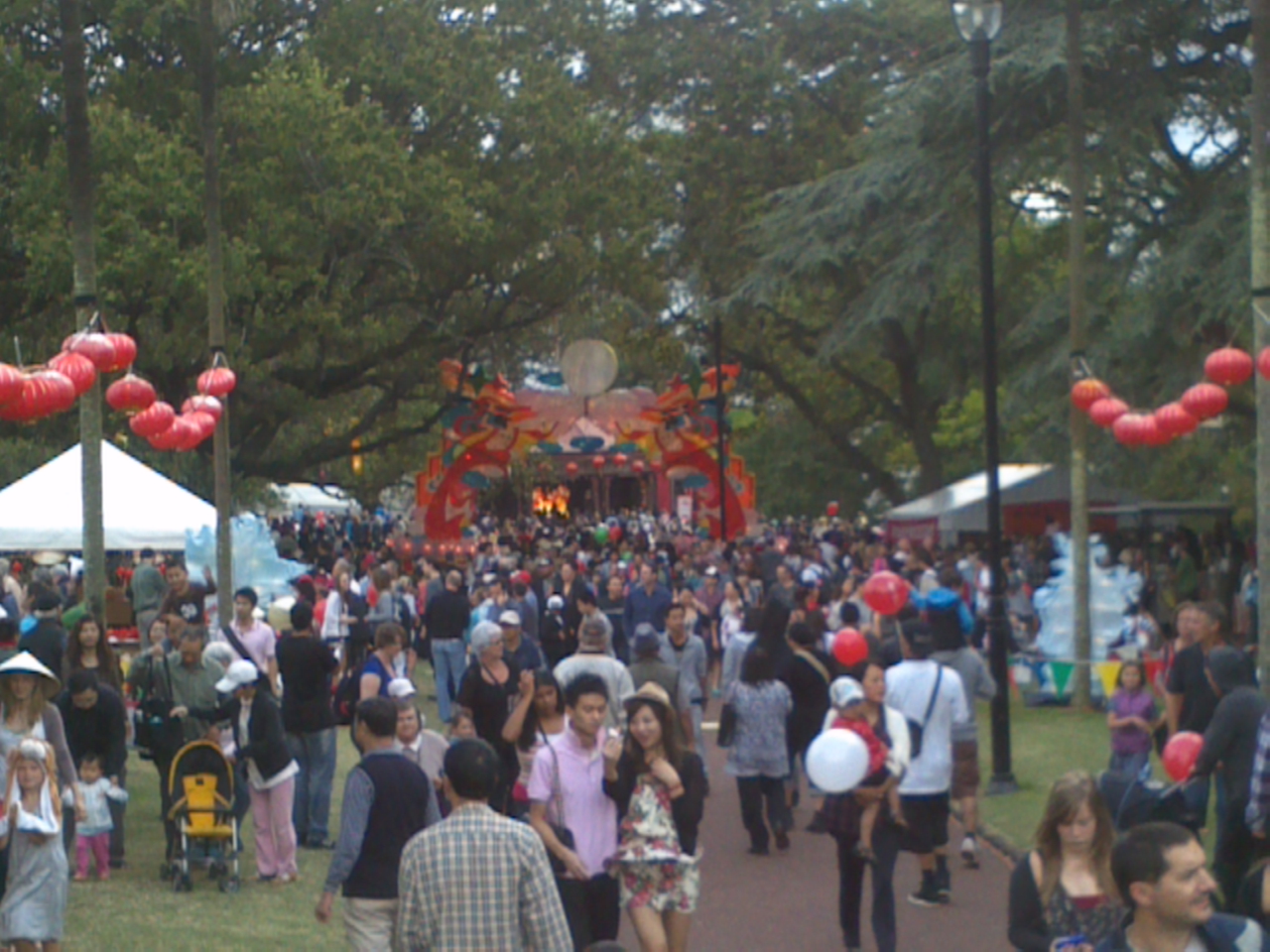
Another Lantern Festival comes and goes and New Zealand celebrates Chinese culture in this wonderfully multicultural land. Aren’t we lucky? Just the week before New Zealanders were having a collective seizure over selling the Crafar farms to the Chinese. All is now forgiven in the bonhomie of dragon lanterns and dumplings.

Just the week before, the Labour Party, that party which loves and propagates the presence of ethnics in Aotearoa and vigorously defends our rights for cultural maintenance, suddenly wanted the Crafar Farms to be kept in New Zealand ownership.  Then there is the National Party. Prime Minister John Key has said and reiterated that New Zealand will be welcoming more investment from the Chinese. At the same time converting TVNZ7, a truly public television channel, into a shopping channel. Money and investment from the Chinese is desired but that economic benefit does not translate into equity of representation for the ethnic minorities locally, for the rest of the country to know and understand their stories and cultures and to overcome racist attitudes. The hypocrisy on both sides is obvious, their lip service to multiculturalism. You wonder where the xenophobia comes from? Is the fear of foreign (non-white) investment connected or not connected to how ethnic minorities are perceived and treated in Aotearoa New Zealand?

But then we have events like the Lantern Festival (and Diwali) to give us that connection don’t we? That annual gathering, mixing and mingling of mostly local Chinese and mostly mainstream (white/Pakeha) where everyone sees each other, feels good, eats Chinese food, sings karaoke, watches the fireworks, checks out the imported lanterns and goes home. Until next year. If the aim of such an event is to bring in a zillion footfalls and therein be successful then that is fine. Any B grade movie aimed at the lowest common denominator does just that. It is called mindless entertainment.

Imagine this:  Within the interiors of a HR department:

Two Pakeha read the top page of resumes and throw them in a rubbish bin.

PERSON A :Wong, Leung, Kwok, Kwon, Yik … no, no, no.

PERSON B : Oh you’ve got Asians in your pile too?

PERSON A : Yeah, seriously…no speak Engrrish … I don’t even bother to read through. PERSON B : I know! I just wish someone worthy applied, makes things easy you know … so what did you do over the weekend?

PERSON A: We went to the Lantern Festival. It was so good. I ate so many dumplings and the lanterns they were amazing.

PERSON B : Weren’t they just? I look forward to the Lantern Festival every year. It is so much fun.

PERSON A : My family just love Chinese food. We go to yum char once a month for sure. PERSON B : I love yum char! Which is your favourite yum char place?                                                                                                                     FADE OUT.*

Does multiculturalism, as implemented by governments and related organisations, break barriers via events like the Lantern Festival (and Diwali) or perpetuate the other-isation, exotic-isation and ghetto-isation of ethnic minorities? I would argue that in the larger, multicultural context of this nation, an event like the Lantern Festival is aimless. Like giving popcorn and fizzy drinks to malnourished children so as to feed them but it is not the correct food is it?. Do we learn about Chinese people and Chinese culture at the end of it all? Do we know about their (and by extension other ethnic minorities) contribution to Aotearoa New Zealand?

How many of these visitors are going come away with more knowledge of the local Chinese?

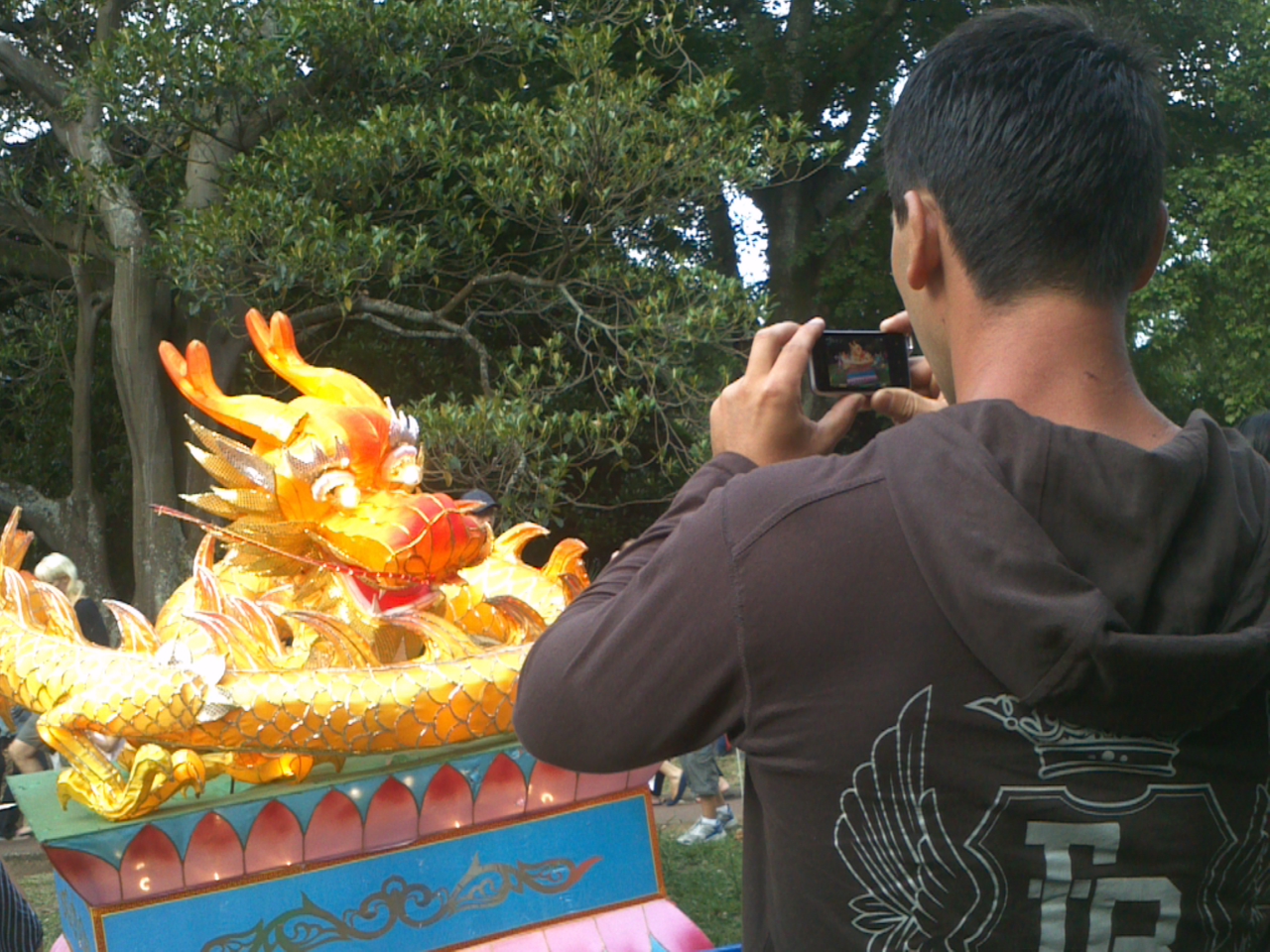
Just another photo op.

Andrew Butcher of the Asia:NZ Foundation says that ”The immediate stuff in our neighbourhood I think that requires a wee bit more work and a wee bit more adjustment.” (In this article on overseas investment figures.) How much is ‘a wee bit more’? Theoretically, if the festivals organised by the Asia:NZ Foundation were meant to change perceptions about Asians, then, in the last ten years since these events began, New Zealanders would want to know about the dumpling-maker rather than just eat the dumplings ya? Unless of course the idea is to exhibit ethnic minorities as anthropological specimens on an annual basis and feel good about how diverse we are.

So, a wee bit more is actually work on a daily basis with everyday cultural existence and behaviour that is normalised and integrated. Not merely teaching Asia in schools or commissioning research that the media reports and forgets. A wee bit more is about the chaos at grassroots level that grows into a movement for sustained, constant visibility and finally acceptance. A wee bit more is empowering minorities and expanding their thinking not just engaging with community leaders and community elites.

Should white people be in charge of showcasing the ethnic minorities of New Zealand? Or teaching Asians about guanxi and how to be Asian or telling young Asians to go on their OE to Asia?  Asia:NZ is white people. (Pardon the English.) Perhaps it is about maintaining colonial, hierarchical power structures to keep ethnics in their place. Is there a wee bit where the ethnics get a say in their representation (minus the dumplings and Bollywood dancing)?

Let us suppose that these festivals are ‘soft power’ projected by New Zealand and packaged with economic incentives for China/India/Asian countries. To attract and persuade them that we are a multicultural nation and we take care of our ethnic minorities. (Look! We celebrate their festivals!) That’s great. We need more trade so why not. Then (a) why fake the concern for the communities and their culture? and (b) if the love for the local ethnics is genuine, is any of that money coming in be going to used to towards creating a robust, egalitarian society that is less racist and not so xenophobic?

Also, for the sake of argument, one can say these festivals are better than nothing. At least we ethnics get a chance to gather and show our culture. Sure. Does that mean (a) we shouldn’t try to improve upon the concept and (b) not question how, our representation, as shaped by white people, remains shallow and superficial? Or how their idea of multiculturalism is about reducing inherent complexities and preserve white supremacy? Where real, existential issues of ethnic minorities are overlooked in the name of cultural maintenance, where the elites from ethnic communities are deemed cultural representatives, where cultural certainty and ‘authenticity’ is the only thing allowed so white people can decide who you are? Multiculturalism which insists on staying static despite changing demographics.

That of course brings up the question of so called community leaders and patriarchs. Who, in most cases, are more interested in photo-ops with the Prime Minister and getting on panels and boards or becoming famous. Maybe these people agreed to the idea of ethnic festivals, to Diwali and the Lantern Festival ten years ago. How about seeking a review? In my experience they would rather be subservient to the government/Asia:NZ as long as their status in the community is maintained.

One way to move is to dismantle the hierarchical structures that insist on representing minorities. Then to rebuild. To separate international trade and business from local celebrations of culture and are yet connected because economic development is common to both. To restructure such as to engage with grassroots, where diversity is not a commodity within the soft power of our nation but a real value, where Asians are in charge of Asian culture, where young Kiwis of Asian origin have a say because this is their future. Asia:NZ is due for a new CEO. Maybe an Asian CEO? Perhaps a complete rehaul?

And for all this ethnic communities have to reflect upon their own place and culture; to break the model minority myth, to build relations with each other even as we work through cultural maintenance and identity, so we have a say in the matters of this nation, to be seen as more than pawns by political parties and the white echelons. Remember what Uncle Bob said? Otherwise,

Most people think, great man will come from Wellington, Make a flash festival and make everybody feel high.…get up stand up…

*sorry for the wrong script format and apologies to my Chinese friends for using their surnames.

Sharing the love.

Quote


http://kiwistargazer.blogspot.com/

I may not have enough time to write one of my ponderous blogs but here is one that I enjoy from time to time. Anjum Rehman has a definite point-of-view and is a wonderful person. More power to you sista!

Is India Really Calling?


I recently finished reading Anand GiridharadasINDIA CALLING, an intimate portrait of a nation’s remaking. I’d watched Jon Stewart interview Anand on The Daily Show and decided to read the book. Any book on and about India fascinates me. The idea of India as perceived and expressed by the writers more often than not reiterates that India means a billion things to a billion people. Some emotions and concepts overlap and some don’t. Depends on where you come from and where you want to go. So of course I picked up the book from my local library. It is less than 300 pages and should have been an easy read but a lot of the time I would slam it shut in mild irritation. Mild irritation because (a) the descriptions just went on and on as if trying to capture, project and exoticise an imagery for a Western audience already unable to fathom the effects of globalisation on a third world country (b) this was an upper-middle class, slightly condescending, slightly enamoured, male point-of-view.

It does not bother me that Anand is a second generation Indian-American. That was one of the reasons I wanted to read the book. The search for identity and roots is an universal desire amongst migrants and so Anand’s idea to go back to India and rediscover his roots is absolutely valid. Neither is he a bad writer but to condense a complex country and current social churning into India101 is problematic. Especially when there is no critique, only fascination.

I will only bullet-point the following and not necessarily in order.

  • Before anything else, the chapter on Mukesh Ambani is utterly sychophantic. Of course being the richest man in India means people either like you or hate you (and I’m not a fan) but perhaps like in a biopic there might have been some endearing qualities to this man, maybe. Anand has not been able to tell the reader so. Instead he pushes the idea that Mukesh Ambani represents the new India where anyone can become rich. The ‘villager-made-good’ image of Mr Ambani is repeatedly portrayed as if he does not care two hoots about being seen in chappals and pants that begin at his chest. How do you know it is not a deliberate image created to appeal to the common-man Reliance shareholder? And then build an ostentatious tower on allegedly dubiously obtained prime real estate.
  • Then there is Ravindra from Umred. Great story of a lower caste boy who made it big and even went to Hong Kong as team manager for the Indian roller skating team (although I cannot find any reference online). What percentage of the lower castes does he represent? Barely none. Just one ‘success story’ is not a sign of changing India. Is Ravindra now with a political party where he is the token Dalit leader? I am curious. Has he been able to transform his community by empowering them or just made money for his family? While rest of the lower castes continue to be where they are because the new middle class, made of poor people from the upper caste, assert themselves within the schema.
  • The Upstairs and Downstairs chachas from Ludhiana, one who exists in the past and another who looks towards the future are such caricatures. We know, we’ve always known. Such families existed before economic liberalisation and always will. They will be in television serials and in Indian films; they will be in your building in urban Bombay and they will be in some remote small town in the middle of India. My family has specimens like this. It is not a new conflict created in modern India unless it is to sell to Western readers.
  •  Obeisance to neoliberalism comes through in the chapter on the Maoists in Hyderabad. Anand tries hard not be be contemptuous of a ‘part-time’ revolutionary who also writes for The Economic Times but ultimately accuses him of being another Brahmin who will treat the workers/comrades as if from the lower castes. On one hand the book eulogises the contradictions that is India and then goes on to point fingers at a living example of the same. Because a businessman activist who runs an NGO aimed at social justice is more kosher than a middle class man who is trying to pay the bills and create awareness of a different kind? Thomas Friedman v/s Karl Marx scenario. Depends on who makes the inference. In this case it is Anand Giridharadas.

The book pretty much retells bits and pieces of Indian history for a Western reader but stays clear of the uncomfortable. Where is the Hindu-Muslim conflict? Why not a single Muslim minority person who might have possibly gained from economic liberalisation? What about the Hindu fundamentalists? Farmers who own and till their own land, frustrated at global cotton prices and helpless because of the free-market policies in India?

Anand tells his grandfather’s story, of marrying a young girl and working for Hindustan Lever, of old school cultural values. Very touching and beautiful. My grandfather grew up in poverty and was the first from his family to have higher education-to become a doctor. He too had very old school cultural values. Honesty, modesty, frugality, hardwork, social responsibility and all that. In his book Anand somehow interprets these as British values that do no fit Indian culture anymore because as India has become richer Indians have gone back to their ‘real’ culture. Manu’s culture; that ‘we-are-like-this-only’ and so everything is relative and subjective. A low caste man commiting a crime deserves to be punished whereas a Brahmin not so. (I have over simplified it here rather than get into a deeper discussion.) So all the above values as subscribed to by our grandparents are alien. That means, as I interpret it, Indians can get away with a lot of bad behaviour and continued lack of repsonsibility towards the world because of some ancient patriarch whose words suit our existence. Or is it that while money is great and greed too, there is no need to apologise about it because the scriptures say so? How convenient. That leaves no space for public discourse at all. Except to blame the government and politicians for every bad thing.

The only three things Anand has observed perfectly are the (a) attitude of the upper middle class South Bombay types who live in posh localities and frequent the posher clubs (or gymkhanas), (b) the modern Indian woman. My dear sisters from back home. Nothing changes there and (c) the lack of a liberal arts education that allows one to think tangentially.

I know this blog is already too long but I do want to use two films as examples of pinpointing the changes in India; to see how Indians negotiate modernity and tradition.

Karan Johar’s 1998 film Kuch Kuch Hota Hai showed us young Indians who lived in their designer gear, played basketball, called each other dude, travelled the world (in the space of the songs) and were at ease with themselves. They had no desire to question tradition and culture, in fact that is where they anchored themselves. Elders were not challenged, there was no sign of defiance, resistance or protest. It was all about the family, love and maintaining status quo. More than ten years later, Imtiaz Ali‘s film Rockstar has an angry, defiant young man as the protagonist. He is unable to express himself, does not know how to do it. His girlfriend gets married without understanding the meaning of it (as do many young Indians) and then the real love story begins. An extra-marital relationship that is fraught with guilt and the inability to escape from what is. There are questions galore, directed to family, to society, to tradition but no words to articulate. (Except through the song Sadda Haq.)  In the end both die. That is the impact of globalisation without social discourse. It has speeded up the way Youngistan is discarding ‘old ways’ but without any bulwark of references (should I say foundation). This is unprecedented. The older generation, even those in their forties, who grew up in a socialist India that then transformed into a free market India in the early nineties, what I call the ‘lost generation’, is still to comprehend the changes. So where is that leading to? Backwards. Because when we cannot make sense of what is going on we look to the ‘golden’ past, to religion and the scriptures, imagining and hoping to find safety there.

At best Anand’s book is a collection of his personal expriences and observations as he tries to figure out his ‘Indian identity’ and at worst it is a form of Orientalism I have not yet been able to name. It would be problematic if the book became the definitive text about social and cultural life in free market India.

Diwali, Dance And The Indian Diaspora.


It is that time of the year when the local councils in New Zealand and Asia:NZ have ‘official’ celebrations of Diwali in Auckland and Wellington. White folksy interpretation of a Hindu festival with Fiji-Indian conceptualisation and a sprinkle of Hindu fundamentalism disguised as Bollywood. It is a great way to carry on the Free Trade Deal (FTA) dialogue with India, apparently. But definitely a sneaky way for the fundamentalists to hoodwink PC, dumb white folk to think that Hindu=India, all at once homogenous, exotic, hard to understand and where everyone eats samosas. Whoever said cultural integration of diasporic peoples cannot be simplified so as to tick all the boxes? Then we all live happily ever after.

It took me three years to complete this documentary. I went into the homes of my people here, engaged with bright, enthusiastic school kids who have no platform for expression and listened to the ‘elders’ lecture me on the meaning of ‘being Indian’ (or how important they really are).  I also got an amazing story from a old, old man, now deceased, about how he went back to India and participated in the struggle for freedom. There were many of his generation, who,  inspired by Mohandas Gandhi, travelled by sea to India to resist British rule. That unfortunately is not part of the video inserted below but I hope to tell the story some day.

Filmmaking is hard work and without money the only things that sustain you are passion and a burning desire to tell a story.  If I had any funding for this film it might have been a different product. However, the journey so far has made me determined to continue telling stories that don’t fit trends or showcase the exotic peoples of the East and Africa, even as case studies in neo-liberalism.  Middle class Indians across the world are a force to reckon with economically but most of the time (I assume, from my experiences in New Zealand), really not interested in political movements or resistance or protest unless things affect them. Equality and solidarity within humanity is not worth the same as Indians being equal to white people. So we continue to perpetuate stereotypes of a model minority imitating culture from back home and compare ourselves to imperial masters, even aspire to be them. There is a little sliver, a gap somewhere in there though where the stories stay invisible, unheard, un-articulated.  Emotions that overlap, experiences that are shared with all humanity. That’s where I attempt to work. This film is the first of many more to come, as many as I can possibly make in this life. Enjoy!

Paresis Of Mythical Past.


The 34 Asterix comic books feature 704 traumatic head injuries. Thus have academics analysed and published in a paper in the European Journal Of Neurosurgery, Acta Neurochirurgica. The researchers, lead by Marcel A Kamp, examined the signs (periorbital ecchymosis, hypoglossal paresis etc) and rated the seriousness of each injury according to the Glasgow Coma Scale (GCS). Over 50% of the traumata were classified as severe (GCS between 3-8) and in 696 cases the cause was blunt force while 8 were caused by strangulation. Of course most of the victims were Romans (63.9%) and the rest included Vikings, Britons, Normans, Goths and even extraterrestrials; most of the injuries were caused by Asterix and Obelix (57.6%). Those who consumed Getafix’s Magic Potion suffered from more severe traumata. So goes on an article reporting the same. The analysis has the world of science excited and impressed. Okay. So that might be one big joke and not so robust, apparently, but someone tried.

I wonder. Can Indian pop kitsch mythology withstand even the slightest scientific or academic analysis? It is not an (pseudo)intellectual question. Could the gods, goddesses and demons (asuras) undergo tests classifying actions and reactions, using the Amar Chitra Katha comics as reference? Yeah, Asterix and Obelix cannot be compared to the 330 million Hindu gods because they are created by humans for comic books, as cartoon characters. That is one argument. Hindu mythology has developed over millenia and is largely an allegory for the mysteries of the world and questions about existence. But aren’t the pictures in the ACK comics derived from some reference? Don’t we make our gods in the images we want to see and admire? Or does the aura of mythology and the holiness attached to it preclude enquiry and analysis?

One Sunday morning some years ago, a friend and I went to the Avondale Market. There was a stall selling pooja paraphernalia. The usual kitsch and glitter that our Hindu gods and we love. And fair, rotund, rosy-cheeked, beautiful goddesses. ‘Nice goddesses,’ I told the Indian man from Fiji. ‘These images are inspired by Raja Ravi Varma you know.’ The man was aghast. ‘These goddesses are thousands of years old, sacred. Our holy texts describe them.’ ‘Really, who told you?’ I wanted to have a few laughs. My friend rolled her do-you-have-to eyes. 🙂 Pardon me for talking down from my pedestal but how on earth do we move ahead if we don’t know where we come from? And I don’t mean in sociological terms or as a migrant living in the Western world.  If religious priests had it their way we would all live and die blind in a world created by their gods. So we need to know these gods came about in the first place. No?

I swing between being atheistic to agnostic and somewhere in-between I acknowledge the presence of a higher power, the laws of this universe that are equal and unrelenting. The rest is all man made. So are our stories and myths. I’ve always enjoyed the many stories from Hindu mythology. My grandfather was an amazing storyteller and he could narrate stories at the drop of a hat. Not just from the Hindu epics but tales of local saints and miracles, unkown-to-Brahmanism.  He was an avid reader and taught us to be the same. Then to seek the real meaning beneath. That is what Hindu mythology is about. Representing the ever flowing universe and all within. Everything alive,  everything divine, everything in flux. Nothing is pure good or pure evil, one balances the other and even the Gods (Brahma, Vishnu, Shiva) are not infallible.

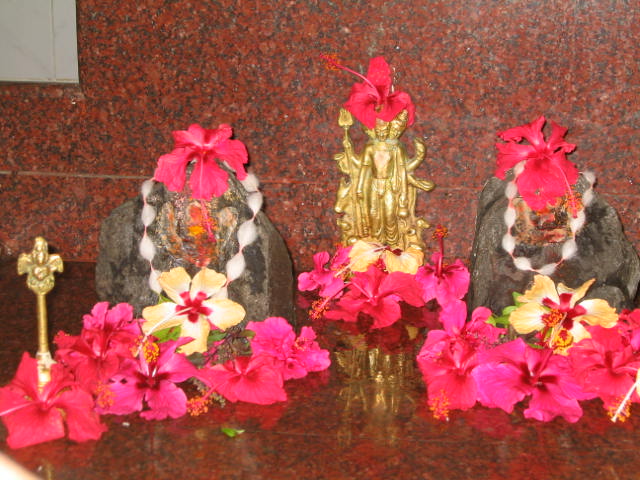
Even if, at this moment, the universe cannot be comprehensively broken down within the realms of physics and biochemistry, why not try to analyse where the imagery comes from? My ancestral family deity is represented by a stone.  Never mind the statue in-between. And the village goddess is as black as sin.

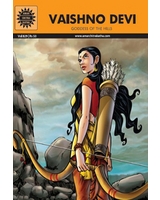
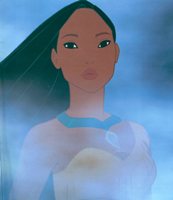
Now think of a pictorial representation in terms of popular culture. In order to humanise and hence relate to mankind. Is that an ever evolving process or set in stone? If we let the religious priests have their way, then yes, pictorial representations would be set in stone. Unless there is money to be made. Then I suppose it is fine for Vaishnodevi to look like a light skinned version of Pocahontas as imagined by Disney? The fairness cream being sanctioned by the holy texts. Until then. Paresis of mythical past. Just saying. Now I’m off to re-read Asterix’s adventures. Along with my surgery chapter on head injuries.


All About Me.


Almost two months since I posted last. Thanks to Nadi who commented, asking me to write a new post. It never ceases to surprise me that people actually read what I write and is gratifying and overwhelming. 🙂 The reason I have not put pen to paper, to use an old term, is that I am very occupied with a project that requires a 110% of my attention. It concludes mid-June and I will not know the outcome for sometime after but that can potentially change a lot of things. For me.

My new year’s resolution for 2011 was all about me. Not to make more money, not work more but beauty stuff me. Maybe more facials and pedicures-that was sort of the idea.

But I did not know where to begin. It is not like I am ‘un-vain’. Of course not. I am a girl who likes bling, a little bit of make up, gorgeous shoes, nice clothes, shiny hair. I do visit salons and beauty parlours; I have the serums and the night creams and under eye gels; all the anti-ageing potions and lotions that keep me from running a magnifying lens over my crow’s feet and other wrinkles. It still does not stop my girlfriends from declaring that I ‘dress like a maid’ or turning up a nose at my op-shop second hand clothes. It is just that I am not obsessed with the beauty thing and fashion for me is a medium. A form of expression. It was time to explore that this year.

The first thing my semi-noob, geeky brain figured out was that I needed an education. I had be able to use the knowledge of beauty and fashion to adapt to my person and consequently enhance it. Now I am not one of those try-the-testers-spray-the-perfumes types just for the sake of it. I feel awkward at beauty counters asking for information. Instead my comfort zone is the computer. I started browsing Youtube. Really I had no idea! There are zillions of videos on how to apply eyeliner  (or for that matter how to brush your teeth and wash your hair). Cat’s eyes? Eyeliner for big eyes, small eyes, (East) Asian eyes, Middle Eastern eyes…. I have used liquid eyeliner for years but did not know eyeliner came in cream/gel and pencil form too. The effort put into these videos made me wonder at the time spent into ‘looking good’.  And the money. The money! How much money do women spend on make up? Do you really have to bin the mascara after a year? Even if you have used it just five times?

As I my cerebrum was absorbing and storing this wisdom I read that Bobbi Brown and M.A.C had released concealer and foundation for brown women. i.e. South Asian women. (I must confess here I did not know Bobbi Brown was a woman. Somehow the name is like that of a man. Wait, wasn’t Whitney Houston’s ex-husband Bobby Brown? D-uh!) Anyway, concealer and foundation for South Asian women. Us South Asian women have a different pigment in the skin making it incompatible to use make up made for white/Caucasian women. Or African women. Our underlying skin tone is yellow which is why concealers and foundations incorporate that and help us look flawless. East Asian women have a slightly orange tone and African women have a purple/blue skin tone. (I cannot corroborate from any specific online article but have collated this from various articles. Please correct me if I am wrong.)

Okay so I could go to the Bobbi Brown counter and buy myself a concealer. Or so I thought. Did I have the guts to ask one of those fabulously made up dolls at such places to give it to me while she crushed me with her once-over and while I cringed at the price as well as my bluster/ignorance? A friend visiting from India and well integrated in the world of the Hindi film industry accompanied me. For moral support. And I was pleasantly surprised. The girl at the Bobbi Brown counter took one look at my face, whooped with delight at the idea of a blank canvas and got painting. Then held the mirror for me to see how gorgeous I had become. I did not have the heart to tell her that it was not me at all. It was someone with lots of goo on her face; someone who would wonder if people are staring at her because she was ‘gorgeous’ or looked like a clown. The lovely lady then wrote down the matching shades for me to buy later. One day I will. When I have money to spare. Because concealer does not come by itself. There is a primer, there are brushes, there is a corrector, foundation and powder. No I do not have to consume it all but that is the general idea-that it goes together.

Meanwhile my education continues. I’ve learnt that this scary looking thing is an eyelash curler and not a surgical instrument; that there are many websites and blogs dedicated to women wearing make up; that these women want to share their experiences and experiments just as I want to on my blog; that there is a fine line between preoccupation with looking good and doing it for the sake of decent appearances. I believe in dressing, looking and feeling pleasant so when others interact with you they get the vibes, feel happy and smile. One goes with the other.

I now have three blushers-peach, light pink and maroon/crimson. I bought myself two new lipsticks last months. I still think fashion is a medium and so want to design Asian inspired streetwear for women one day. Meanwhile I have to now get back to my project and get it done with. Cheers.

Passive Performance As Multiculturalism. (In New Zealand) Part 2.


In part one of this blog I introduced my argument and quoted Milton Fisk. Multiculturalism in New Zealand is based on a neoliberal model that recognises diversity but does not allow it flow over into the mainstream because that upsets the economic structure and global expression of the same. I used as a starting point an article by Henry Johnson and Guil Figgins that: (a)Examines the re-contextualization and transformation of Diwali in New Zealand with emphasis on performance (b) Explores the role that various organisations have and looks at (c) The ways in which performances are expressions of self-identity and part of a process of place-making.

Re-contextualization/Tranformation:

The paper says Diwali Downunder is a secular affair that is recontextualised and transformed into a celebration.

Diwali, as celebrated in India, is a family affair. However it is still public in a way because the entire country celebrates it according to region and community. So it is a public-private affair. There is no place for communal performance of any kind especially Bollywood. The ‘transformation’ cannot be called secular because the very nature of the festival excludes non-Hindu South Asians-it is a Hindu festival within a ‘homogenous’ space as per organisers. Perhaps because India is a larger economy than other South Asian countries? In my film Jennifer King says that since the Chinese Lantern Festival was successful, they decided on Diwali. (So a non-religious Chinese festival is the same as a deeply religious Hindu festival?) Then the very nature of this does not offer any scope for re-contextualization. My questions:

  • Is a publicly celebrated foreign festival a true transformation when the space is predetermined by government organisations?
  • How can a culture be re-contextualized in that same space which only seeks passive participation from the local Indian community?
  • Isnt the otherness endorsed by the same and then to maintain that because it is about replicating and imitating from back home and that becomes representation.
  • You need local creatives to re-contextualize. Where are the local artists?
  • Why has Jacob Rajan never performed at Diwali?
  • Name one creative who has come out of this transformed/re-contextualized space to breakout on to the national stage?

Organisations and events:

The paper says that the role of the organisations is positive and Asia:NZ’s role (then known as Asia 2000) contributes towards developing visibility.

To a certain extent that is true but what has the role of Asia:NZ to develop visibility of the Indian community got to do with social integration? Asia:NZ Foundation was established in 1994 by the Jenny Shipley government (National) to help develop better economic ties with Asian countries. On 7/11/2004, the tenth anniversary of Asia:NZ, Phil Goff (Labour), then in government, said in a speech in Parliament Ten years ago, New Zealand had embarked on a policy of active engagement with Asian economies. We had expanded our ties with Asian countries on a number of fronts politically, economically and diplomatically. …”

When you have economic benefit as your core ojective then culture has to be shaped and presented accordingly. Diversity becomes a commodity instead of a value.

Then organisations develop mutually beneficial MOUs such as with Auckland City Council.

Self-identity and Place-making:

Expression of self identity means taking charge of who you are. Culturally, ethnically and in the present. It means challenging notions of being the ‘other’ to oneself and to the mainstream. That goes beyond recognition. It is about equality.

  • Expression of self identity is a form of resistance and that is anathema to neo-liberal multiculturalism. The Indian identity here is shaped within the context of Diwali-exotic and different. But equal?

Placemaking comes from telling stories by owning a place and you own a place by actively participating in the place/space. There is only passive participation in the Diwali Mela.

  • Real place-making can happen only when the past is not sought to be fossilised in the present. It is different from cultural maintenance.

Indian culture then does not spill into, flow into and mix with other cultures or even the mainstream. How then can social issues be addressed?

What multiculturalism then?

It is clear from the current neoliberal model of multiculturalism in New Zealand that migrants and their diversity are recognised for economic benefits. The inference in my film is the same. “Food, footfalls and festivals for cultural consumption…my identity reduced to song and dance to satisfy the stakeholders…” Here the stakeholders are the organisers and sponsors. The Indian community is clearly not perceived as a stakeholder in an active, participatory, decision-making manner except to please them about their presence and numbers at an annual Diwali Mela. As if seeing others like yourself once a year in masses is reassuring of your place and space in New Zealand.

I do not have a clear cut answer to which model of multiculturalism New Zealand should seek. It is a matter of korero, dialogue.

Milton Fisk: The cultural view of recognition stays within the bounds of neoliberalism. the social view of recognition does not counterpose recognition and equality; instead, it makes equality a vital part of recognition.

Amartya Sen: 1-Promote diversity as a value in itself. 2-Focus on the freedom of reasoning and decision-making positively supported through social opportunities.(Identity And Violence The Illusion Of Destiny. Sen, Amartya. Allen Lane-Penguin Books, 2006.)

Tariq Modood:1-Socio-economic opportunities and outcomes. 2-Socio-cultural mixing. 3Civic participation and belonging (Open Democracy blog)

New Zealand is unique because we have the Treaty Of Waitangi that no other country in this world has. Any form of multiculturalism cannot be propagated without involving tangata whenua. How does the Diwali Mela create a dialogue with Maori? What is the place of migrants as tau iwi? If migrant culture is seen as economically viable to sell the idea of New Zealand as blissfully diverse, to tell India and China that their people are loved here so let’s get on with the FTA, then Maori will become invisible to migrants. That would be perilous.

And after all this, I must make clear that I am not against the Bollywood dance competition or Diwali. It is the implementation and institutionalisation that is problematic. Besides, the Indian community in New Zealand, the youth need to take charge of their identity. Not just as ‘Indians’ but as New Zealanders. They need to question their space here. Merely doing an anti-Paul Henry dance at Diwali does not stop the racism. Neither is it resistance.